

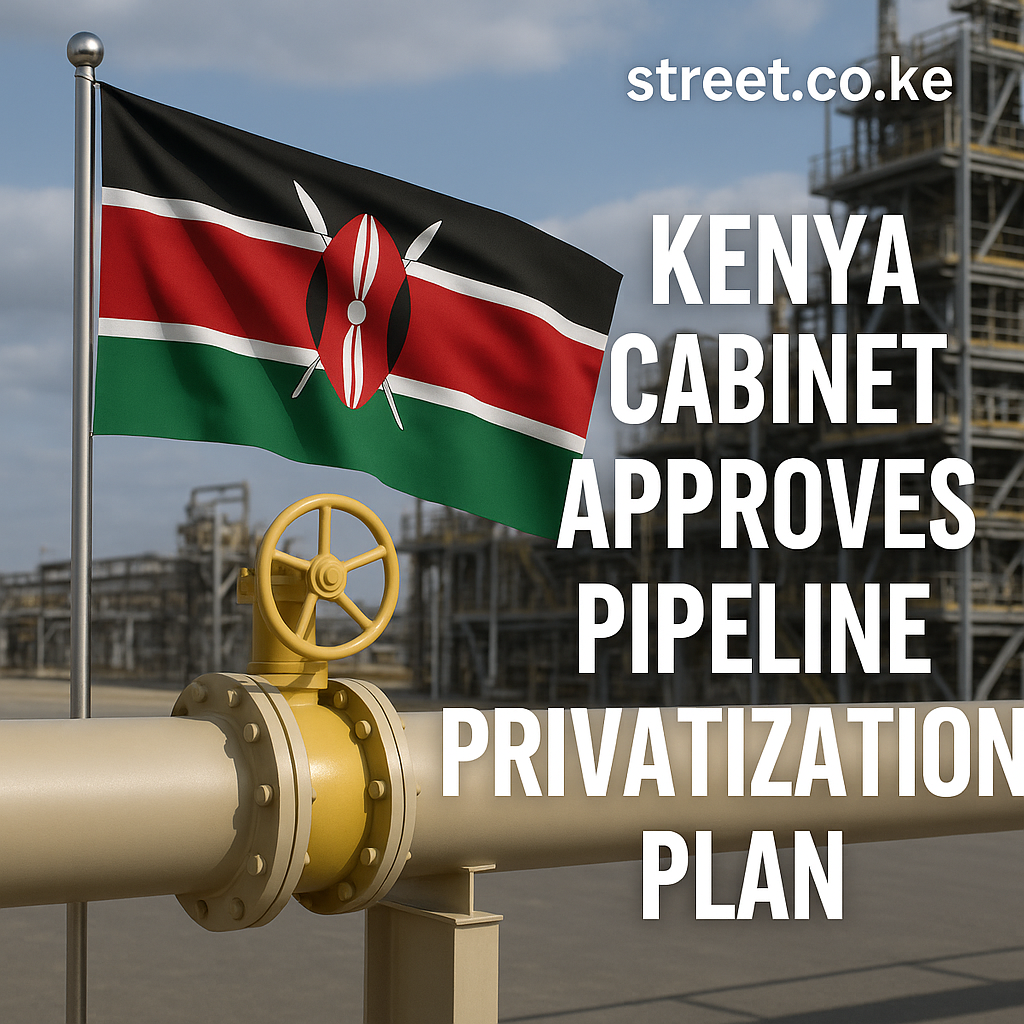
Kenya Cabinet Approves Pipeline Privatization Plan
By Street Newsroom | street.co.ke | July 30, 2025
Nairobi, Kenya – In a bold move aimed at revitalizing the country’s energy sector and easing fiscal pressure, the Kenyan Cabinet has approved a comprehensive plan to privatize parts of the Kenya Pipeline Company (KPC), a state-owned entity responsible for fuel transportation across the country.
The decision, made during a Cabinet meeting chaired by President William Ruto at State House Nairobi, marks a major policy shift and aligns with the government’s broader efforts to divest from parastatals deemed commercially viable.
A New Phase for KPC
According to a statement from State House, the privatization will be “strategic and partial,” allowing private sector participation in the management and operations of KPC while retaining government oversight of key infrastructure.
“The move is designed to improve efficiency, attract private investment, and reduce the financial burden on the exchequer,” the Cabinet communiqué read.
KPC operates over 1,300 kilometers of oil pipelines and is crucial to the supply of petroleum products in Kenya and neighboring countries including Uganda, Rwanda, and South Sudan.
Why Now?
Kenya is under pressure to restructure its public finances amid rising debt and a growing fiscal deficit. The decision to open up KPC comes at a time when the government is looking to offload non-strategic assets and promote private sector-led growth.
Experts argue that introducing private players into KPC could address long-standing issues of mismanagement, inefficiency, and corruption, while spurring innovation in a sector key to the country’s logistics and energy supply.
Mixed Reactions
While some stakeholders have welcomed the plan as long overdue, others have raised concerns about transparency and the potential loss of public control over critical infrastructure.
The Kenya Pipeline Workers Union has warned of potential job losses and is demanding detailed consultations before any agreements are finalized.
Economist Dr. Kwame Owino noted, “Privatization, if well executed, can unlock value and efficiency. But Kenya must ensure the process is transparent and benefits citizens, not just politically connected elites.”
Next Steps
The privatization plan now heads to Parliament for legislative backing, after which the Treasury will invite bids or expressions of interest from potential investors.
Analysts say sectors like storage, distribution, and pipeline maintenance could be prime targets for private equity and regional energy firms, especially as East Africa’s fuel demand continues to grow.
Bottom Line
The approval of the KPC privatization plan is a pivotal step in Kenya’s economic reform journey. With public debt soaring and infrastructure in need of modernization, the government is betting that public-private partnerships will deliver the efficiency and capital injection the pipeline network needs.
The success of this initiative, however, will depend on open processes, regulatory safeguards, and assurances that national interests remain protected.
Stay with street.co.ke for updates on this developing story.